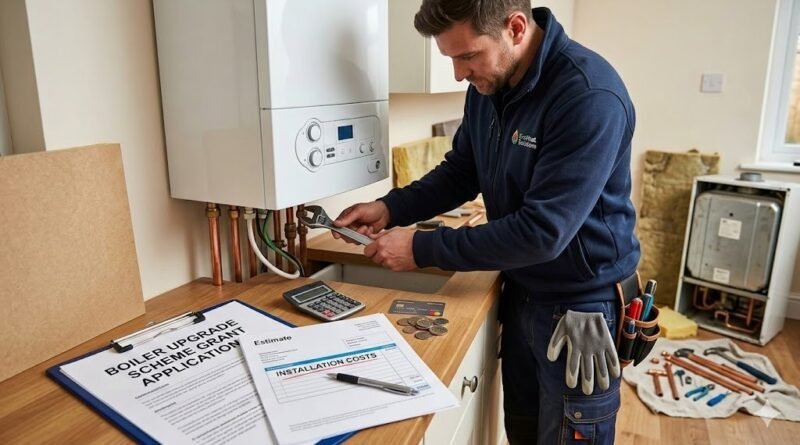
Do Boiler Upgrade Grants Cover Installation Costs?
That is exactly right—the logic behind these programs is to remove the barrier of entry entirely. UK grants such as the Boiler Upgrade Scheme and ECO4 do not simply subsidise the equipment but include the total cost of installation, materials, and certification.
The government is not giving you a voucher for the materials and then leaving you to install them yourself; they are ensuring the transition to low-carbon heating is handled by professionals from start to finish.
This is exactly what is included, what is not included, and how to avoid the pitfalls that most people fall into.
What Schemes Actually Cover Installation?
The Boiler Upgrade Scheme (BUS) is the main scheme for England and Wales. It provides £7,500 for air-source and ground-source heat pumps, as well as £5,000 for biomass boilers.
ECO4 is for low-income and fuel-poor households. If you are on Universal Credit, Pension Credit, or similar benefits, ECO4 will pay 100% of the installation costs.
What Costs Are Actually Covered?
Let’s take a closer look at what the grants cover and what you have to pay. This is important because fuzzy math creates budget shock.
What is Included in the Grant?
The grant includes the following:
- Equipment costs – the heat pump, boiler, or biomass system itself
- Labour and installation – all the work that needs to be done to get the system up and running
- MCS certification costs – the registration costs of the installer
- Basic materials – pipes, fittings, and mounting hardware, and electrical work
For BUS, the installer will apply for the voucher after inspecting your property. They will then subtract the grant value from the quote. You will pay the remaining amount. The installer will then claim the voucher from Ofgem – the money will never go through your account.
| Scheme | Max Grant | Covers Installation? | Typical Savings |
| BUS (Air/Ground Heat Pump) | £7,500 | Yes, full cost share | £7,500 off total |
| BUS (Biomass Boiler) | £5,000 | Yes, upfront deduction | Reduces to ~£10k |
| ECO4 (Boiler/Heat Pump) | £10k–£30k | 100% for eligible | Full funding possible |
What’s Not Included in the Grant?
Grants do not cover:
- VAT on your outstanding balance – you will be charged VAT on the amount you pay, not on the grant component
- Non-eligible upgrades – smart thermostats, cosmetic radiator covers, or other enhancements
- Structural changes – if your property requires comprehensive electrical panel replacements or floor strengthening, this is typically additional
Some installers include these additional costs in their quotes without specifying what is grant-eligible and what is discretionary.
How Do You Actually Apply?
The application process varies by scheme, but both prioritise installer-led claims to reduce fraud and ensure technical compliance.
What’s the BUS Application Workflow?
Check basic eligibility using the GOV.UK eligibility tool. Confirm you’re replacing fossil fuel heating and have an EPC. Then contact MCS-certified installers (find them via the MCS register) and request quotes under the Boiler Upgrade Scheme.
The installer surveys your property, confirms suitability, and applies for the BUS voucher on your behalf. Once Ofgem approves — typically within 2–4 weeks — the installer deducts the grant from your final invoice. You pay your share, work gets completed, installer claims the voucher.
What About ECO4?
ECO4 applications run through energy suppliers or local authority flex schemes. Check eligibility by verifying benefit status and EPC rating. Contact your council or use the Simple Energy Advice tool to find ECO4 installers in your area.
Gather required documents:
- Proof of benefits (Universal Credit statement, Pension Credit letter, etc.)
- Property EPC certificate
- Photo ID
- Landlord consent letter if renting
Installers assess your home, confirm eligibility, and arrange 100% funded installation if you qualify. The energy company covers costs directly — no upfront payment, no reimbursement delays.
Applications take 4–8 weeks from initial contact to installation. Surveys confirm whether your property suits heat pumps (outdoor space, noise regulations, insulation levels) or if a high-efficiency boiler makes more sense.
What Benefits Justify the Effort?
Even when grants don’t cover 100% of costs, the long-term value proposition improves dramatically compared to unsubsidised installations.
What Are the Financial Returns?
Efficient heat pumps cut annual heating bills by 20–30% compared to old oil or LPG boilers. For a household spending £1,500 annually on heating, that’s £300–£450 saved every year. Over a 15-year system lifespan, savings compound to £4,500–£6,750 — potentially more as fossil fuel prices rise.
Payback periods with grants: 5–8 years for BUS-funded heat pumps, faster under ECO4, where the upfront cost is zero. Without grants, payback stretches to 12–15 years, making the decision much harder to justify financially.
What About Environmental Impact?
Heat pumps eliminate 1.5–2 tonnes of CO₂ annually per household compared to gas boilers. Across the schemes, that’s over 17,000 tonnes of carbon savings delivered since launch. If decarbonisation matters to you — or future regulations force your hand — grants make the transition affordable now rather than mandatory later at potentially higher costs.
Combine heat pump installation with insulation upgrades (also fundable under ECO4) for maximum efficiency. An uninsulated home with a heat pump wastes the technology’s potential and keeps bills higher than necessary.
What Mistakes Kill Applications?
Most grant rejections come from avoidable errors. Here’s what trips people up and how to prevent it.
Why Do Properties Get Rejected?
Property unsuitability is the top disqualifier. Heat pumps require outdoor space (typically 1–2m²) and must comply with noise regulations — units can’t sit directly against neighbours’ walls in dense terraces.
Non-MCS installers automatically disqualify you. Some cowboys offer “cheaper” installations using the grant as bait, then fail certification checks. Use only MCS-registered firms found through the official MCS register.
Missing EPC requirements delay or block applications. If your EPC shows outstanding loft or cavity wall insulation recommendations, you must address those first or demonstrate they’re impossible (e.g., solid walls, already insulated).
What About Timing?
ECO4 currently runs through March 2026 with a likely extension, but funding isn’t infinite. As deadlines approach, installer availability tightens and wait times stretch. BUS runs through at least April 2028, so timing pressure is lower — but future governments could adjust terms.
Apply early rather than waiting for “better” schemes that may never materialise. The grants available now are the ones you can actually use.
What’s the Bottom Line?
Boiler upgrade grants cover installation costs explicitly — that’s their purpose. While the Free Boiler Upgrade Scheme Grants generally aim to reduce typical out-of-pocket costs from £12,000+ to £4,000–£5,000, programs like ECO4 can eliminate costs entirely for qualifying households.
The application process requires MCS-certified installers, valid EPCs, and realistic property assessments. Avoid non-certified installers, understand what’s covered versus what’s extra, and act before funding windows close.
The grants exist. The installation coverage is real. The only question is whether you’ll use them while they’re available.
