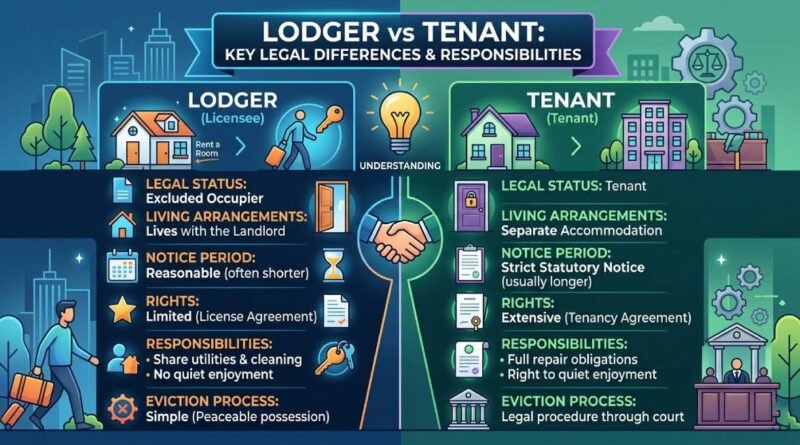
Lodger vs Tenant: Understanding the Legal Differences and Responsibilities
When renting out part of a property or looking for a place to live, the terms lodger and tenant are often used interchangeably. However, in UK property law they represent two very different types of living arrangements, each with its own rights, responsibilities, and legal protections.
For homeowners considering renting out a spare room, as well as individuals looking for accommodation, understanding the distinction between a lodger and a tenant is essential. The type of agreement in place can influence everything from notice periods to legal rights and eviction procedures. This guide explains the key differences and what both parties should know before entering into either arrangement.
What Is a Lodger?
A lodger is someone who rents a room in a property where the landlord also lives. In most cases, the lodger shares certain parts of the home with the landlord, such as the kitchen, bathroom, or living room.
Legally, lodgers are often referred to as excluded occupiers. This means they typically have fewer legal protections than tenants because they are living in the landlord’s primary residence.
The arrangement is usually governed by a lodger agreement rather than a tenancy agreement. This document outlines important details such as rent payments, access to shared spaces, house rules, and notice periods.
For homeowners, taking in a lodger can be an attractive way to generate extra income while continuing to live in their property.
What Is a Tenant?
A tenant, by contrast, usually rents a property or part of a property where the landlord does not live. The most common type of tenancy in England and Wales is an Assured Shorthold Tenancy (AST).
Tenants generally have more extensive legal protections than lodgers. These protections include defined notice periods, specific eviction procedures, and additional rights relating to deposits and property standards.
Tenants may rent an entire property or occupy a room within a shared property where all residents are tenants rather than lodgers.
Because tenancy agreements are more formal and legally structured, landlords must comply with several regulations when renting out property in this way.
Key Legal Differences Between Lodgers and Tenants
Understanding the legal distinction between these two arrangements can help avoid confusion and potential disputes.
Living Arrangements
The primary difference lies in whether the landlord lives in the same property.
- Lodgers: The landlord lives in the property and shares common spaces.
- Tenants: The landlord lives elsewhere and rents the property to the tenant.
This difference significantly affects the rights and legal protections available to the person renting the accommodation.
Legal Rights and Protection
Tenants benefit from a range of legal safeguards designed to protect renters. For example, tenancy deposits must usually be protected in a government-approved scheme, and landlords must follow formal eviction procedures if they wish to regain possession of the property.
Lodgers typically do not have the same level of legal protection. While they still have basic rights, the landlord generally has greater flexibility in managing the arrangement.
Notice Periods
Notice periods can also differ between lodgers and tenants.
For tenants, notice periods are usually specified within the tenancy agreement and must comply with legal requirements. In many cases, landlords must provide formal written notice before ending the tenancy.
For lodgers, notice periods are often shorter and may simply reflect the payment schedule. For example, if rent is paid weekly, the notice period may also be one week unless otherwise stated in the agreement.
Access to the Property
Tenants have stronger rights regarding privacy and property access. Landlords must usually give advance notice before entering the property, except in emergencies.
Lodgers, however, generally have less exclusive control over the space they occupy because they live in the landlord’s home. As a result, landlords may have more flexibility in accessing shared areas.
Responsibilities for Landlords
Whether renting to a lodger or a tenant, landlords still have important responsibilities.
For both arrangements, landlords must ensure the property is safe and well maintained. This includes providing safe electrical systems, complying with gas safety regulations, and ensuring the property meets general health and safety standards.
When renting to tenants, additional legal obligations may apply. These can include deposit protection requirements, right-to-rent checks, and providing legally required documents such as energy performance certificates.
Landlords who are unsure about their responsibilities may benefit from seeking professional advice. Experienced estate agents in Cardiff, for example, often assist landlords in understanding the correct agreements and regulatory requirements for different types of rental arrangements.
Responsibilities for Lodgers and Tenants
Individuals renting accommodation also have responsibilities regardless of whether they are lodgers or tenants.
One of the most important obligations is paying rent on time and following the terms outlined in the agreement. Rent payments, notice periods, and house rules should all be clearly understood before moving in.
Occupants are also expected to take reasonable care of the property, report maintenance issues promptly, and respect any shared living arrangements.
For lodgers in particular, maintaining a positive relationship with the landlord is important since they are sharing the same living environment.
Advantages of Having a Lodger
For homeowners, taking in a lodger can offer several benefits.
One major advantage is the potential to earn additional income. The UK government’s Rent a Room Scheme allows homeowners to earn a certain amount of tax-free income each year from renting out a furnished room in their primary residence.
Having a lodger can also provide companionship and help with household expenses such as utilities and council tax.
However, it is important to establish clear house rules and expectations from the beginning to ensure the arrangement runs smoothly.
Advantages of Renting as a Tenant
For renters seeking greater independence and privacy, a tenancy arrangement is often more suitable.
Tenants typically have exclusive access to their home and stronger legal protections. This can provide greater stability, particularly for those planning to stay in a property for a longer period.
Tenancy agreements also provide clear terms regarding rent increases, repairs, and the landlord’s responsibilities, offering additional reassurance for renters.
Choosing the Right Arrangement
Deciding whether a lodger or tenant arrangement is more appropriate depends on the circumstances of both parties.
Homeowners who want to remain living in their property while generating additional income may find taking in a lodger to be the most practical option.
Landlords with separate investment properties, however, will typically rent them out under tenancy agreements that provide greater legal structure.
For renters, the choice may depend on their lifestyle preferences. Those seeking lower costs and flexible arrangements may consider lodging, while individuals who value privacy and stability may prefer a tenancy.
Professional guidance can also be helpful when making these decisions. Property professionals, including estate agents in Cardiff, often provide insight into local rental markets and can help landlords and renters understand the most suitable arrangements.
Conclusion
Although the terms lodger and tenant are sometimes used interchangeably, they represent two distinct legal arrangements within the UK property market. The key difference lies in whether the landlord lives in the property, which in turn affects the rights, responsibilities, and protections available to the person renting the accommodation.
Understanding these distinctions is essential for both homeowners and renters. Clear agreements, awareness of legal responsibilities, and open communication can help ensure that either arrangement runs smoothly.
For anyone considering renting out a room or searching for accommodation, taking time to understand the differences between lodging and tenancy can prevent misunderstandings and lead to more positive living arrangements.